At least once over the past few years, I’ve returned to Geneseo as part of my semi-annual “get out of New York City” upstate New York getaway. I remember the first time I returned to town after beginning The Historical Society Project (I didn’t have this title then.)
It was the summer of 2021. As usual, Anna and I got lunch together and chatted about life, family, work, and the happenings at the museum and around town.
Anna wanted to know more about my new project–a history of the Livingston County Historical Society (LCHS).
I told her that I didn’t have a concrete plan yet. It was still too early. I was purposefully casting a very wide net, getting acquainted with the basic timeline of the LCHS, scoping out the various archival resources available, and going where my curiosity led me. I had some basic questions: How did the LCHS begin? Who or what has shaped the LCHS over time?
Anna had her own question.
“I just want to know how this place has remained relevant for so long.”
I sensed a tinge of exhaustion and disbelief in her voice. We discussed the difficulties of breaking through and gaining attention as a small local history museum.
Why would anyone care about the Livingston County Historical Society, she questioned. Why would they give their money and support to us when “the Met” is preserving ancient artifacts and incredible masterpieces of art?
Hmm…there’s the Met again. I remembered my internship and the duct tape mannequins and floppy rulers. This time it wasn’t funny.
To be clear, none of this is about the Metropolitan Museum of Art (Met), specifically.
“The Met” is a proverbial punching bag; it is an extreme example used (sometimes in jest) to illustrate the generally disadvantaged position of many smaller community museums and organizations compared to their much bigger, more well-known counterparts within the cultural heritage landscape of the United States.
The Metropolitan Museum of Art, and places like it, are comparatively well-funded, and they attract visitors, talented staff, and the best artifacts for their permanent collections. These organizations can generally follow professional museum best practices with proper facilities, tools, and staffing. All these things, in turn, help them grow into even more resources in the form of significant grants and cash donations.
For smaller museums that rely on limited staff or volunteers, it can be a considerable undertaking to apply for a grant, let alone maintain a thriving institution people want to support. Most small organizations know about and try to follow professional best practices; however, the gap between the ideal picture of how a museum should operate clashes with the reality of limited resources. Despite the effort, there can be an overwhelming sense that what you are doing is not good enough, no matter how hard you try. It can certainly be exhausting, lonely, and disempowering to feel inferior to “the Mets” of the world.
There is a silver lining to all these complicated feelings: they come from a place of care for history, community, and home. This is a beautiful thing. Not every cultural heritage organization can boast that it engenders this kind of goodwill from the people around it.
So with this, I return to Anna’s important questions with a fresh perspective.
How has the LCHS remained relevant throughout its history?
Historical societies don’t just occur. It is not inevitable that people care about the past, much less establish an organization devoted to it. Yet, folks in Livingston County, New York, have cared enough about the LCHS, its museum, and its mission to preserve the county’s history to keep it going for all these years. Why?
I mean–it’s not The Met after all.
This is probably as good a time as any to explain why I’m here.
My scholarly interests include the history of libraries, archives, and museums. I view these organizations as source material. Most people are familiar with the primary purpose of libraries, archives, and museums: they contain, interpret, and make accessible historical materials for their audience, which may be as broad as literally anyone (the public) or a specific community or constituency. Behind the scenes, however, the people that maintain these organizations create and sustain internal systems, practices, and narratives that help to achieve this purpose. These offer a quieter, but no less consequential, interpretation of their own about the importance of history, who it is for, and what preservation should look like. My background as an archivist informs my historical research. In my daily work, I know that the decisions my colleagues and I make convey a point of view about the purpose of history and historical materials, from issues like where an archive sits in an organizational chart to the words assigned to describe a piece of paper. I aim to surface and interpret this evidence of practice and place the day-to-day realities of cultural heritage labor within a broader historical context.
I have considered the LCHS to be a compelling topic for historical research for a long time. I can remember thinking about this idea back in college. It sounded like a lot of fun. I loved being at the LCHS. I liked working with the artifacts and feeling like I was making a difference by preserving history. I enjoyed meeting the people around the historical society. I listened with mild amusement to their in-depth conversations that in any other context would sound absurd:
Do we need to keep this collection of plastic ball-point pens from local businesses? What story do they convey? Do we have better sources to represent these businesses, or are the pens all we have? Will the kids like them? Well, if we can’t decide now, let’s just put them over here next to the World War II posters.
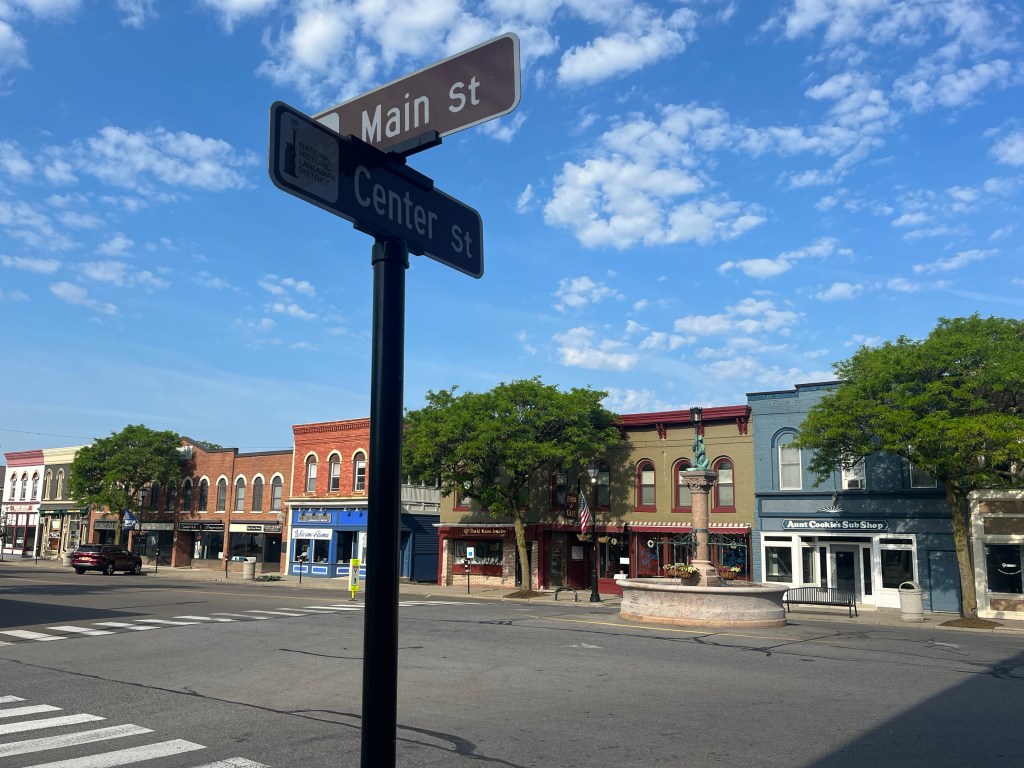
In all seriousness, though, these minor issues (like what to do about the pens) very quickly lead to existential ones about the very purpose of museums. Throw in a bunch of likable townies, and you have a fascinating research subject: a local museum at the center of it all (located on Center Street, no less).
I’m returning to this research idea now with a better appreciation for this little museum and the extraordinary effort required for it to exist and evolve. It is the intellectual work that draws my curiosity most of all. Change is often a choice, and the LCHS has decided to make some significant changes. As a result, it is grappling with fundamental questions about its mission, mandate, and goals. Its institutional history, in turn, becomes incredibly significant because to move forward, the LCHS must address the consequences of how previous generations of the historical society have considered these issues. For example, at one point, those ball-point pens were regarded as necessary for telling the history of Livingston County. Are they still relevant to this mission? Do they fit in with the LCHS’s collection and programmatic goals? If not, what happens to these objects?
For the past two years, I have been investigating the history of the LCHS, trying to understand:
- Who and what has shaped and changed the LCHS over time?
- How has it remained relevant throughout its history?
- What is the relationship between LCHS and the community it represents? How does one affect the other?
- How does the LCHS’s past affect its present?
After searching through digitized newspapers and manuscripts; making a few trips back to Livingston County to read in local archives; and creating a very intense spreadsheet of notes and names, I now have some preliminary answers to these questions. I also have found more fascinating stories to tell, some begging for more context and reflection.
The history of the LCHS also offers micro examples to explore issues that have perennially challenged the broader cultural heritage community in the United States. These include (among many) the availability of resources to do local history work (or lack thereof); the purpose and relevance of history in an ever-changing world; and questions about who/what should (and should not) be featured in museums and the historical record more broadly. I am excited to work on research that places the LCHS squarely in the middle of these significant issues, particularly at this exciting time for the organization. I don’t say this merely because of my subjectivity to LCHS, its people, and its community. Compared with larger institutions, small cultural heritage organizations tend to fly under the radar, particularly in academic and professional settings, popular culture, and sometimes even in the communities and regions in which they are a part. And yet, I would wager that these places are the first (and maybe only) historical organizations that many Americans interact with and contribute to regularly, if at all.
Simply put, we can learn a lot about the history we keep if we take a closer look at the work of one little historical society in western New York State.
My goal with The Historical Society Project is to tell the stories of the people, narratives, and practices that have shaped and sustained the LCHS over time and place this history in a broader context. This blog is my platform for sharing my research. Posts will feature specific people, events, or themes in the LCHS’s history and my interpretation of why it matters. Some posts will stand alone, while others will be written as part of a thematic series. Along the way, I will do my best to feature some of the source material I have found so far. I will try to post something new every month or two. That seems like a pace I can commit to for the long term. I’ll pat myself on the back if I post more frequently.
To be clear, this is still an ongoing research project, and there is more that I want to learn. I am writing this blog because writing can be clarifying and illuminating. (It can also suck sometimes, but I digress.) I know new ideas will emerge as I dig deeper and put the pieces together. I plan to share my discoveries and burning unanswered questions as I go along. Perhaps you, dear reader, will have some ideas or insights for me. I welcome your kind input. Thank you in advance for your help and attention as I continue to work through all my big thoughts.
And cheers for coming along on this journey with me.
Stay tuned.

 The Historical Society Project
Leave a comment